Platform Consolidation, Remote Work
Jessica Cates
|
Beyond the App Overload: How the "Digital Lobby" Cures Platform Fatigue
In the rapid pivot to remote work, most businesses made a fatal strategic error: they overcommitted to a fragmented tech stack. While technology is designed to streamline processes, an overabundance of disconnected tools has created a new systemic crisis: Platform Fatigue.
At Cleary, we’ve seen this "fabric" of the organization fray firsthand. When employees switch between apps 10 times per hour, they don't just lose focus—they lose 32 days of productivity every year. To reclaim your team’s time and escape the "Admin Trap," you must move beyond the "app for everything" mindset and build a Digital Lobby.
What is Platform Fatigue?
Platform Fatigue (also known as app overload) is the cognitive exhaustion caused by navigating an excessive number of digital tools to perform basic work functions. It manifests as decreased engagement, increased context-switching costs, and "technostress"—where the tools meant to help employees actually become a barrier to doing their best work.
The Psychology of the "Zoom Fatigue" Precursor
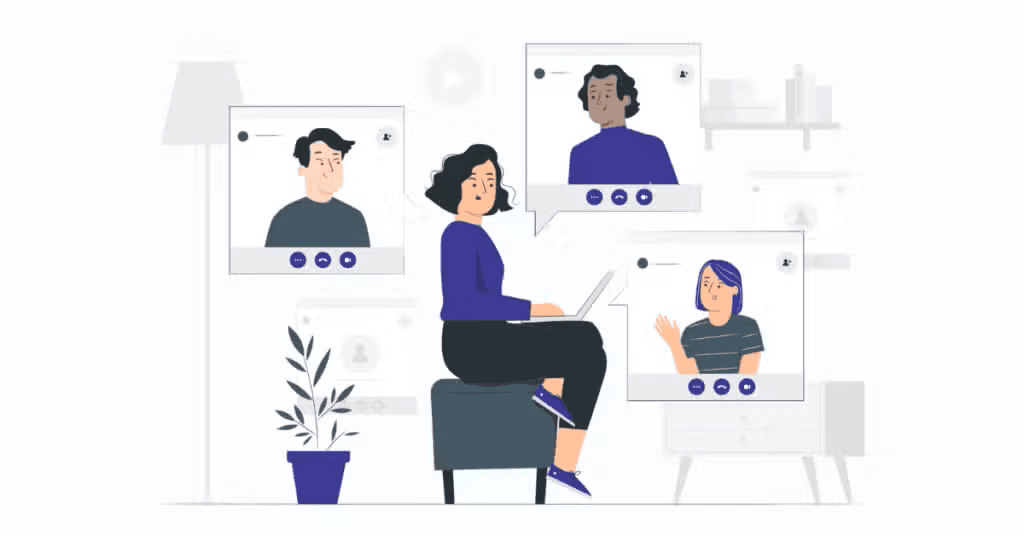
The roots of platform fatigue began with "Zoom Fatigue" in 2020. Peer-reviewed research in Technology, Mind and Behavior identified three psychological triggers that make digital-first communication exhausting:
Intense Eye Contact: The unnatural size and proximity of faces on screen signal a high-intensity situation to the brain.
The Mirror Effect: Constantly seeing your own reflection creates an extra "processing layer" for the brain to compute social performance.
Restricted Mobility: Being "locked" to a computer seat prevents the natural movement (like pacing) that aids cognitive processing.
The Cost of Frustration: Why Your Tech Stack is a Retention Risk
In 2026, the quality of your internal tools is a primary driver of talent retention. Recent data indicates:
51% of employees report being unhappy at work specifically because of the software they are forced to use.
32% of workers have quit a job because the company’s technology was a barrier to their productivity.
49% of the U.S. workforce is likely to leave their current role if they are frustrated with their daily tech stack.
For People Teams, this means that "Administrivia"—the manual work of managing these disconnected tools—is no longer just an efficiency problem; it is a Board-level risk.
The Cleary Blueprint: Shifting from "Black and White" to Outcome-Focused
To solve platform fatigue, leaders must stop buying "stepping stone" tools and start investing in Workforce Intelligence. Here are three ways to simplify your digital office:
1. Build a "Digital Entrance," Not a Filing Cabinet
The primary friction in the hybrid workplace is the "First Search Problem"—the moment an employee stares at a blank browser tab, not knowing where to start looking for info. Cleary serves as the Digital Lobby, acting as a single door that integrates your Slack, Google Drive, and HRIS into one intuitive hub.
2. Choose Interoperable Systems (The "Human-AI Handshake")
Instead of stitching together 20 niche solutions, prioritize tools that work "smarter together." Our founders pioneered this at Twitter with "Birdhouse" and at Square with "mySquare"—centralized hubs that allowed employees to catch up on news and find "who's who" without leaving the flow of work.
3. Focus on High-Leverage Outcomes
Efficiency is a weak business case. Instead, focus on the big-picture ROI. For example, Cleary's AI HR Assistant doesn't just "answer questions"—it reclaims 80+ hours every week (equivalent to 2 FTEs) by automating Tier 0-2 support requests. This allows your HR team to stop acting like a "rulebook" and start acting like a strategic partner.
Conclusion: Tech is Not the Enemy, Fragmentation Is
Platform fatigue is the result of a "more is better" philosophy that has reached its breaking point. The companies of the future will be those that prioritize Clarity, Empathy, and Bionics—using AI to amplify human connection rather than burying it under a mountain of notifications.
Ready to simplify your tech stack and future-proof your People Ops? (https://gocleary.com/start) to see how our 90-Day Pilot can transform your digital employee experience.