Artificial Intelligence, Employee-Centricity, Human Resources
Stephen Karaolis
|
AI in Human Resources has emerged as a powerful tool, reshaping how organizations manage their people.
With the rise of automation, some HR professionals worry that technology might diminish the personal connections that are so crucial in fostering a supportive workplace culture, otherwise known as the “human touch.”
After all, HR is about more than just policies and procedures—it’s about understanding, connecting with, and supporting employees.
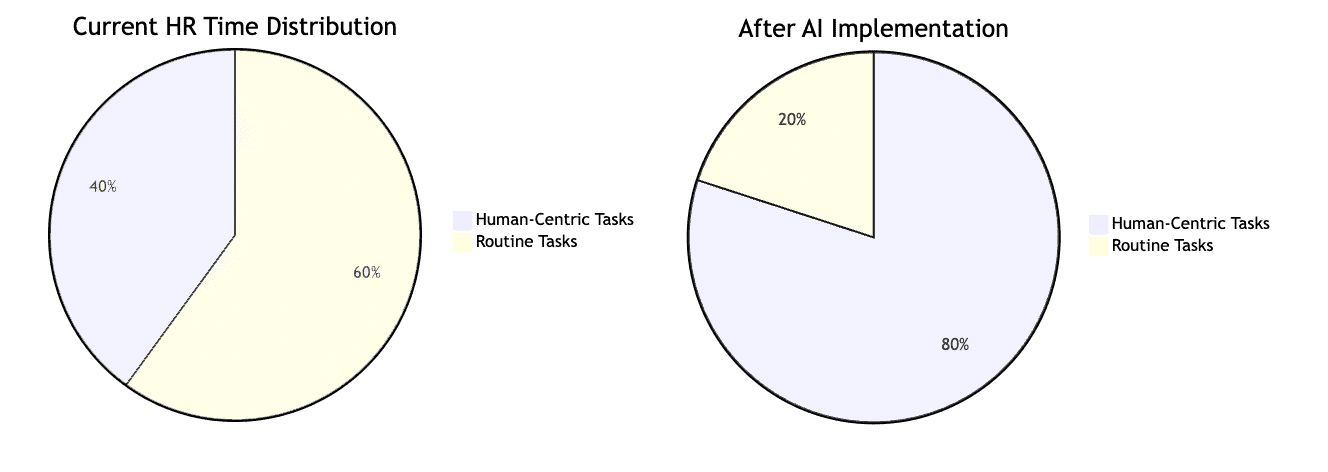
But rather than replacing these human interactions, AI goes a long way in actually enhancing them. By automating either pieces or the entirety of repetitive HR tasks, AI in Human Resources enables HR teams to focus more on creating meaningful, personalized experiences for employees.
This shift allows HR to spend more time and energy developing relationships, boosting employee engagement, and creating a workplace environment where people feel valued and supported.
Addressing HR’s Skepticism Toward AI in Human Resources
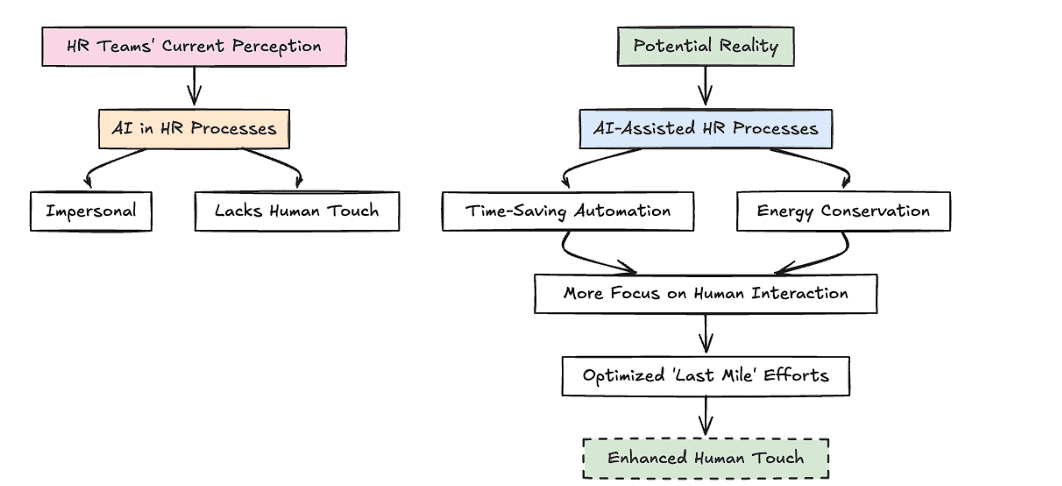
Data has shown that HR professionals are concerned about how AI in Human Resources might impact the human-centric nature of their work. There’s a fear that automation could lead to cold, impersonal interactions—something that runs counter to the reason many got into HR in the first place.
A recent survey revealed that HR teams feel particularly uneasy about AI’s role in sensitive situations, such as employee dismissals or recognitions, where a lack of empathy can negatively affect employee morale.
When implemented correctly, AI doesn’t just handle tasks more efficiently; it reshapes how HR teams allocate their time and focus. By taking over administrative tasks—such as responding to common employee inquiries, managing schedules, or organizing compliance paperwork—AI enables HR professionals to invest more energy into high-touch moments that require empathy and human judgment.
But what’s most critical is understanding the “last mile” of these tasks in HR, and how that is now the critical piece that HR teams can disproportionately allocate energy to, with AI supporting the rest of the workflow. AI gathers data, automates routine steps, and provides insights without replacing the final human-to-human interaction.
That crucial “last mile”—where a manager delivers difficult news or offers praise—remains a distinctly human responsibility.
This ensures that while AI handles the groundwork, HR teams can focus on delivering personal, thoughtful, and emotionally intelligent interactions, which are what employees value most.
Strategic AI Deployment for Human-Centric HR
AI can handle many tasks, but HR leaders need to know where to deploy it strategically.
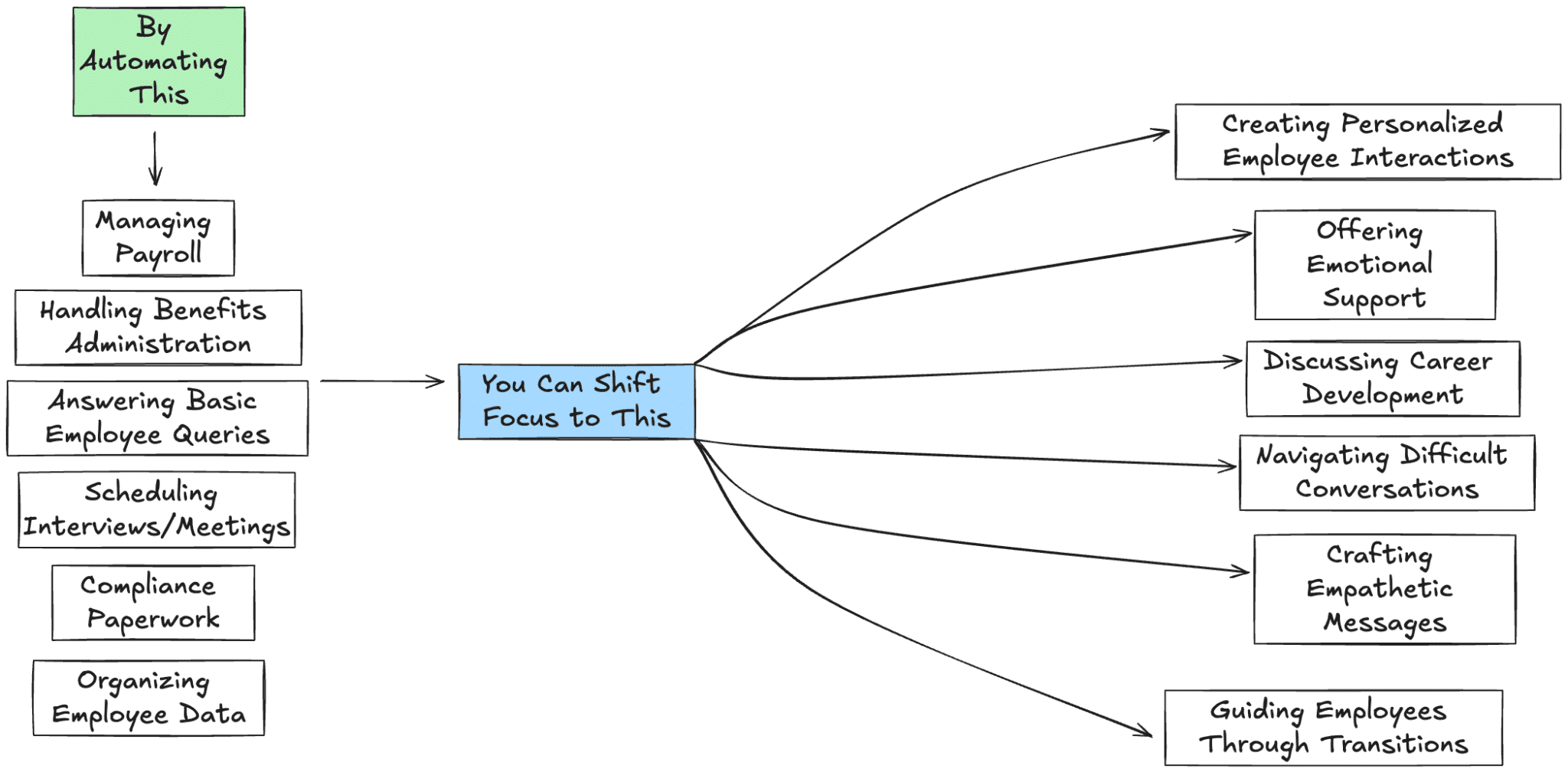
HR professionals can spend a large portion of their time on administrative tasks—handling payroll, managing benefits, answering basic employee queries—that don’t require human intuition or empathy. By automating these tasks, AI frees up HR teams to focus on what really matters: creating personalized and meaningful interactions with employees.
For instance, while dismissing an employee is a delicate matter best handled by a human, AI can assist in preparing for that conversation by organizing performance data, ensuring that all necessary compliance steps have been followed, and generating reports that highlight areas of concern.
AI can guide managers by suggesting talking points based on the employee’s performance history or helping them stay compliant with legal obligations.
This way, HR professionals can shift their attention to the more delicate aspects of the process, such as offering support and guidance to the employee, discussing the next steps, and answering any questions with empathy and care.
They can focus on crafting a message that is sensitive to the individual’s situation, ensuring that the conversation is more than just delivering the news—it becomes a moment of genuine human connection, where the employee feels heard and respected.
With the administrative details already managed by AI, HR can invest more time in providing emotional support, discussing possible transitions, and even helping the employee navigate resources such as outplacement services or career counseling.
Boosting Efficiency with AI-Driven Workflows
While AI can assist with more complex tasks like preparing for employee dismissals or ensuring compliance, its real value shines in streamlining routine workflows that take up a large chunk of HR’s time. A significant portion of HR work involves managing routine inquiries from employees—questions about policies, PTO, benefits, or basic onboarding steps. These are essential but repetitive tasks that often don’t require human judgment. This is where AI truly proves its worth, automating these processes and saving significant time.
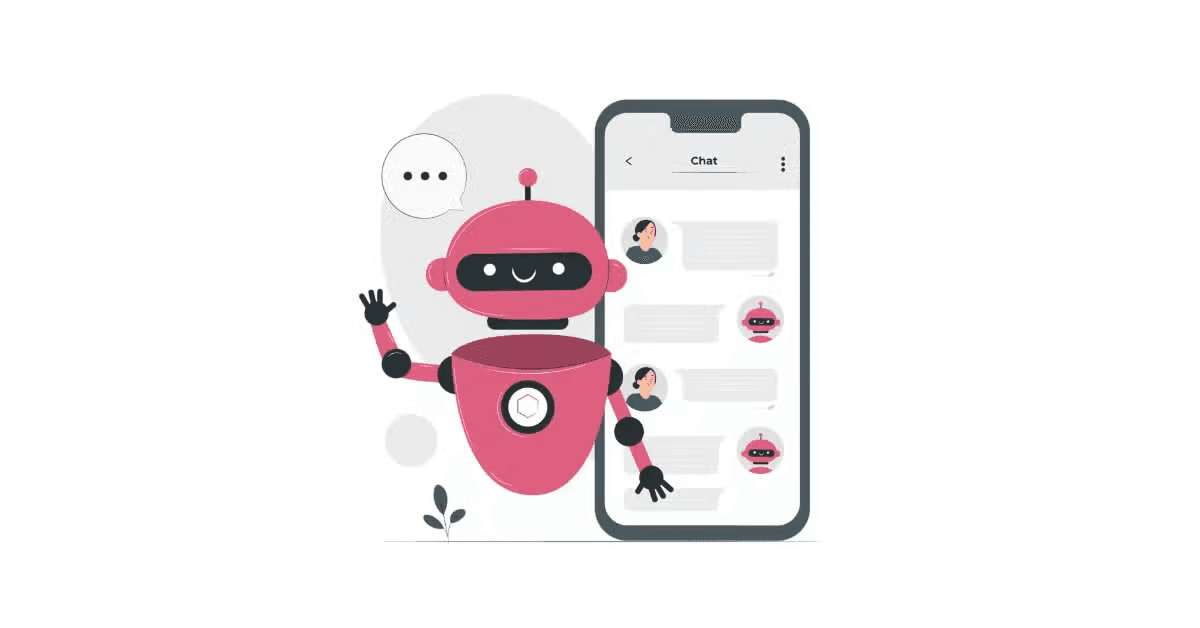
For example, AI-driven chatbots or knowledge bases can instantly respond to common employee questions, allowing HR professionals to focus on more strategic work rather than spending time answering the same inquiries repeatedly. By handling routine workflows efficiently, AI not only speeds up response times but also ensures accuracy, making it a valuable asset for both employees and HR teams.
This is where AI in Human Resources truly excels. By analyzing patterns from routine inquiries—such as ticketing systems used to handle employee questions—AI can categorize and prioritize common issues, allowing HR teams to address them more efficiently. In many cases, a significant portion of routine inquiries, such as PTO requests, benefits questions, and policy clarifications, can be automated during initial implementation phases, providing quick wins for HR teams.
AI-powered chatbots and knowledge bases can manage these routine inquiries quickly and accurately, reducing the workload for HR while improving both efficiency and employee satisfaction. Over time, with further integration and optimization, AI can automate up to two-thirds of these tasks, enabling HR professionals to focus on higher-value work like strategic initiatives, employee development, and engagement.
By managing these non-personal tasks, AI allows HR teams to spend more time on activities that require empathy and human judgment, ensuring a more streamlined, responsive, and people-focused HR department.
Enhancing Personalization
AI also plays a pivotal role in personalizing employee experiences.
AI can analyze data from various touchpoints, such as performance reviews or employee surveys, to offer insights into individual needs, preferences, and engagement levels.
These insights allow HR to tailor their approach to each employee, fostering stronger connections and better support.
For example, AI might identify patterns in an employee’s performance data, suggesting moments where recognition would be appropriate. AI enhances the human touch by ensuring that critical moments are not overlooked.
Assist, not replace!
AI isn’t here to replace the human touch but to enhance it. By automating routine tasks, improving compliance, and offering data-driven insights, AI empowers HR professionals to focus on what they do best: building meaningful relationships with employees, offering support, and fostering a positive work environment.
As AI continues to evolve, its role in HR will expand, but its core purpose will remain the same—to assist, not replace human interaction. The result is a more efficient, responsive, and people-focused HR department that’s better equipped to meet the needs of today’s workforce